
Key Takeaways
-
- Most water heaters last 8-12 years; aging units are more prone to major issues and may be better replaced than repaired.
-
- Warning signs like strange noises, rusty water, inconsistent hot water, or leaks should never be ignored. Early action can prevent major damage.
-
- Some problems (like sediment buildup or failed thermostats) can often be repaired, but corrosion or leaks from the tank itself require replacement.
-
- Relying on licensed, transparent professionals helps you make smart, cost-effective decisions about your water heater
Few things disrupt a morning routine quite like stepping into an ice-cold shower. We often take our water heaters for granted, expecting hot water on demand whenever we turn a tap. Yet, like any major home appliance, your water heater has a finite lifespan. It works tirelessly day after day, and eventually, the wear and tear begin to show.
Recognizing the early warning signs of water heater failure is crucial. It can mean the difference between a simple, affordable repair and a catastrophic leak that floods your basement. But how do you know if that strange noise is a quick fix or a sign that your unit is on its last legs?
At Reliable Plumbing & Heating, we believe in empowering homeowners with the knowledge they need to make smart decisions. This guide will walk you through the common red flags of water heater trouble and help you determine whether it’s time to repair your current unit or invest in a replacement.
The Age Factor: Knowing Your Unit’s Lifespan
Before diving into specific symptoms, the first thing to consider is the age of your water heater. Most traditional tank-style water heaters are designed to last between 8 and 12 years. Tankless models can last significantly longer, often up to 20 years with proper maintenance.
If your unit is nearing or has surpassed the 10-year mark, even minor issues can be a sign that the end is near. Repairing an old unit is often a temporary bandage on a larger problem. Conversely, if your heater is only a few years old, most issues are likely repairable and worth the investment.
You can usually find the age of your heater by checking the serial number on the manufacturer’s sticker. If you aren’t sure how to decode it, our team at Reliable Plumbing & Heating can help you identify exactly how old your system is.
Warning Sign #1: Inconsistent or Insufficient Hot Water
The Symptom: You turn on the shower, and the water is lukewarm at best. Or perhaps you have hot water for a few minutes, but it runs cold far faster than it used to.
Repair or Replace?
This is often a repairable issue.
-
- Thermostat Issues: The thermostat on the unit might be set too low or may have malfunctioned.
-
- Heating Element Failure: In electric water heaters, one of the two heating elements (top or bottom) may have burned out. If the top element fails, you get no hot water. If the bottom one fails, the water runs out quickly.
-
- Pilot Light: For gas units, the pilot light might have gone out, or the thermocouple may need replacing.
However, if your family has grown and your demand for hot water simply exceeds the capacity of your current tank, a replacement (upgrade) to a larger tank or a tankless system is the better long-term solution.
Warning Sign #2: Strange Noises (Rumbling or Popping)
The Symptom: Your water heater sounds like it’s making popcorn or rumbling like a thunderstorm.
Repair or Replace?
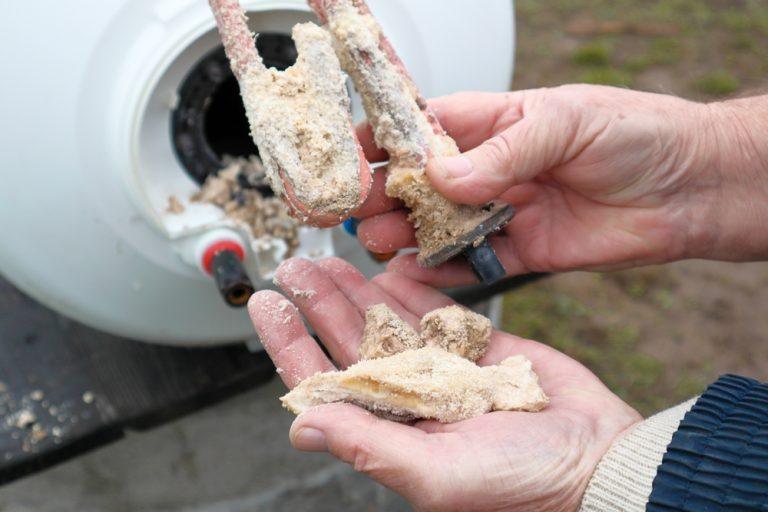
This sound is caused by sediment buildup at the bottom of the tank. Over time, minerals in the water settle and harden into a layer of scale. When the heating element warms up, it boils the water trapped under the sediment, causing popping sounds.
-
- Repair: A professional flush of the tank can often remove the sediment and resolve the noise. This is a standard maintenance task that can extend the life of your unit.
-
- Replace: If the sediment layer has become too thick and hardened, flushing may not work. The buildup causes the unit to overheat and work harder, leading to metal fatigue and cracks. If the tank is old and noisy, replacement is usually imminent to prevent leaks.
Warning Sign #3: Rusty or Discolored Water
The Symptom: The hot water coming out of your tap looks brown, yellow, or rusty, but the cold water is clear.
Repair or Replace?
This is a critical sign of corrosion inside the tank.
-
- Repair: Occasionally, this can be caused by the sacrificial anode rod dissolving completely. This rod is designed to attract corrosive elements to protect the tank lining. Replacing the anode rod might save the tank if caught early enough.
-
- Replace: If the corrosion has spread to the tank walls themselves, there is no fix. Rust weakens the steel, and once the tank starts to rust through, a leak is inevitable. In this case, immediate replacement is the only safe option to avoid water damage to your home.
Warning Sign #4: Leaks and Moisture Around the Unit
The Symptom: You find puddles of water on the floor around the base of the heater, or notice moisture dripping down the side.
Repair or Replace?
-
- Repair: If the leak is coming from a fitting, valve, or the plumbing connections leading to the tank, these can be easily tightened or replaced by a professional plumber. The Temperature and Pressure Relief (TPR) valve is another common, fixable leak source.
-
- Replace: If the leak is coming from the tank body itself, the unit must be replaced immediately. A fractured tank cannot be patched or repaired safely. A small fracture can burst open under pressure, dumping 40 to 50 gallons of hot water into your home in minutes.
The Reliable Solution: Honest Assessments and Quality Work
Navigating water heater issues can be stressful. You don’t want to spend money repairing a dying unit, but you also don’t want to replace a system that still has life left in it. This is where the integrity of your plumber matters.
At Reliable Plumbing & Heating, our approach is built on transparency. When you call us to inspect your water heater, we don’t just look for a sale; we look for the solution that makes the most sense for you and your budget.
Our Process:
-
- Thorough Diagnosis: We inspect the entire unit, checking electrical components, gas lines, valves, and the tank condition.
-
- Upfront Pricing: Whether it’s a repair part or a full installation, we give you a flat-rate price before we start. You’ll never have to worry about hourly rates ticking up or surprise fees on your final bill.
-
- Expert Advice: We explain the pros and cons of your options. If a repair is a viable, safe choice, we will tell you. If replacement is necessary for your safety, we will guide you toward high-quality, energy-efficient models that suit your household needs.
Founded by Robert Lucke, a veteran of the industry, our company prides itself on being locally owned and operated. Our technicians are licensed, bonded, and insured, ensuring that every installation meets strict municipal codes and safety standards. We treat your home with respect, maintaining a clean workspace and removing your old unit so you don’t have to worry about disposal.
Don’t Wait for the Cold Shower
Water heaters rarely fail without giving a few hints first. By paying attention to these warning signs, such as strange noises, rusty water, leaks, or lukewarm showers, you can catch problems early.
If you are unsure about the health of your water heater, don’t guess. Call the friendly residential plumbing professionals at Reliable Plumbing & Heating. We bring the expertise, the tools, and the commitment to customer satisfaction to handle any job, big or small. Let us restore your comfort and peace of mind with reliable hot water you can count on.

FAQ
1. How often should I have my water heater inspected?
It’s wise to have your water heater professionally checked every year, especially if it’s over five years old. Annual maintenance can extend the lifespan and improve efficiency.
2. Is it normal for a water heater to make noise?
Some noise is typical, but noticeable rumbling or popping sounds can indicate sediment buildup. Flushing the tank may resolve it; ongoing noise should be checked by a pro.
3. Can I replace the anode rod myself?
While some handy homeowners do this themselves, it’s often safer and less stressful to have a professional handle it, especially if you’re not used to working with plumbing systems.
4. What should I do if my water heater is leaking?
Turn off the unit and the water supply, and call a licensed plumber immediately. Leaks from valves can often be fixed, but leaks from the tank usually require full replacement.
5. Is it worth upgrading to a tankless water heater?
Tankless heaters offer energy savings and virtually unlimited hot water, but installation costs can be higher. They’re a great option for many households. Ask your plumber if it’s right for you.